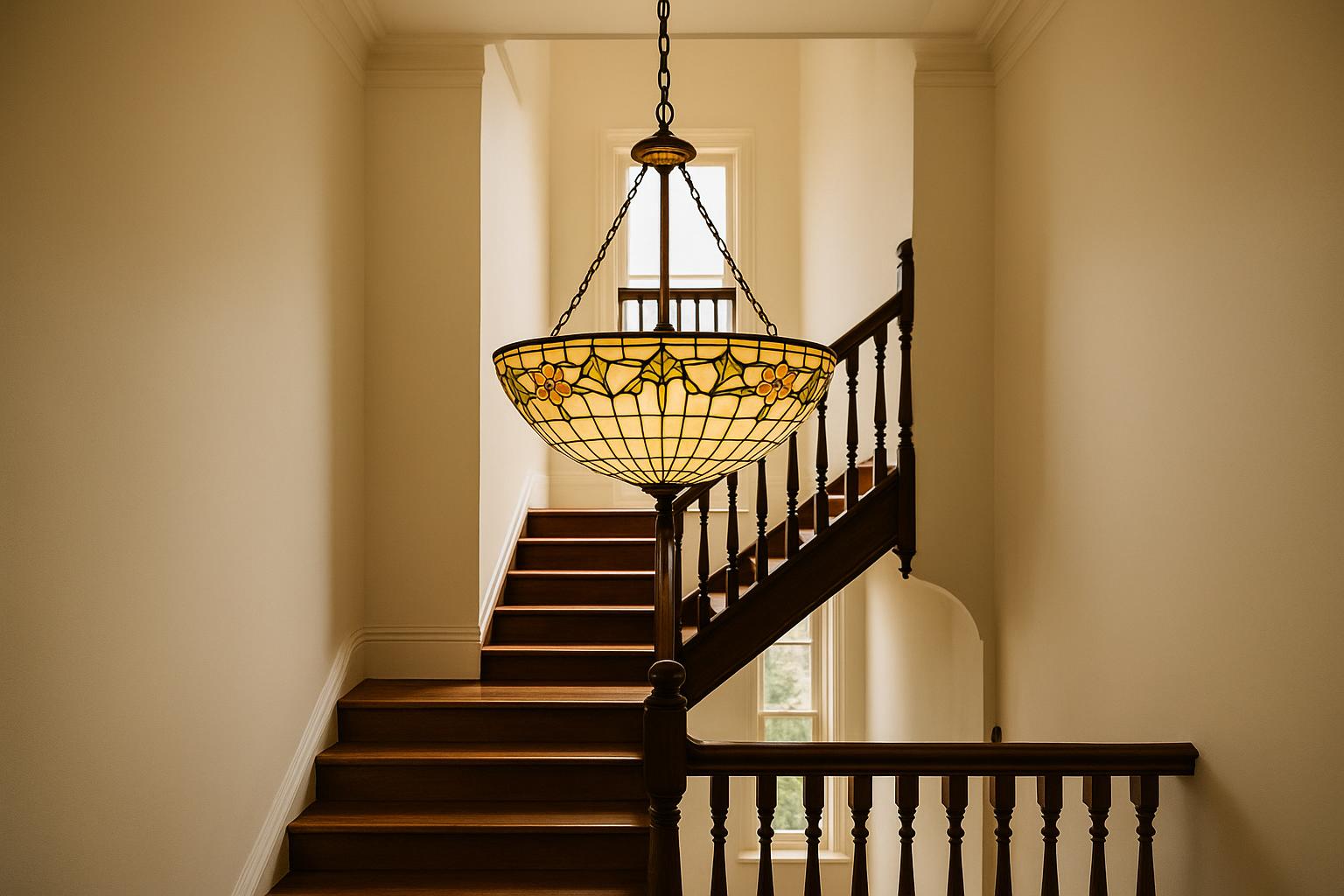
A practical approach to positioning a Tiffany-style chandelier in a tall stairwell, with guidance on sightlines,...
- There are no more items in your cart
- Shipping Free
- Total A$0.00
Measure the Table, Then Choose the Tiffany-Style Lamp
A Tiffany-style lamp can look compact in a product photograph yet feel surprisingly large once its shade is placed beside a bed, on a desk or at the end of a lounge. The base occupies the tabletop, but the illuminated glass has its own visual reach. Rich colour and a wide shade can command more attention than the measurements alone suggest.
For anyone considering how to choose tiffany table lamps, the most reliable approach is to begin with the intended surface rather than a favourite motif. Once the usable space, viewing height and purpose are clear, it becomes much easier to choose between floral, geometric and dragonfly designs without sacrificing comfort or practicality.
Measure the usable surface
Start with the clear width and depth of the table, not its overall dimensions. A bedside table still needs room for a phone, water glass and book. A hallway console may hold keys or mail, while a desk must retain enough space for work. Measure the area left after those everyday objects are accounted for.

Look beneath and around the surface as well. Drawer handles, cupboard doors and switches need to remain accessible. Note where the power point is and whether the cord can reach it without crossing a walkway or being stretched around a sharp furniture edge.
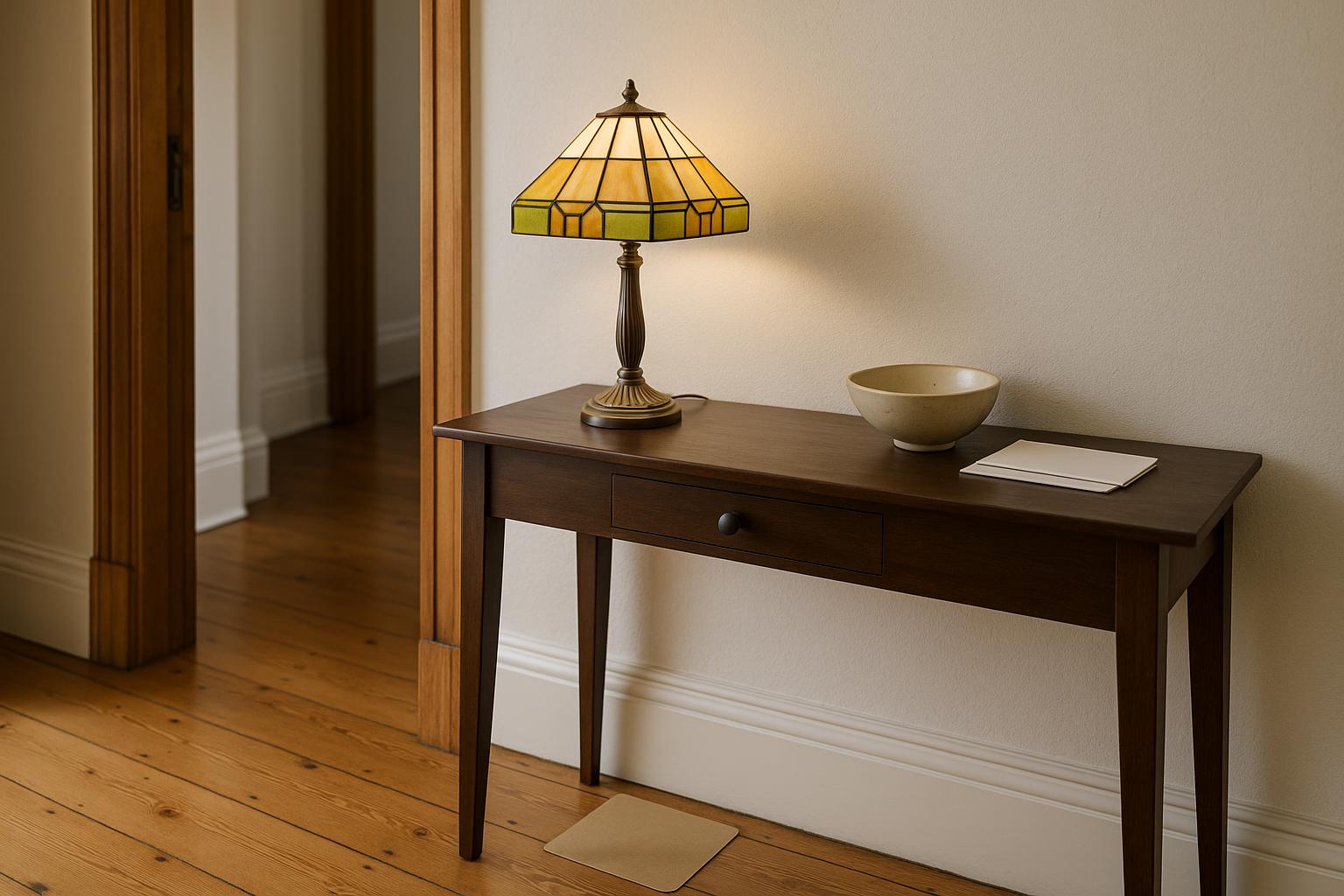
A paper template is more useful than trying to picture the base from a list of dimensions. Cut or fold paper to the published footprint, place it on the table and arrange the objects that normally live there. If the surface already feels crowded, a slender base or small accent lamp will usually be more convincing than a broad decorative fitting.
Compare the shade with the whole table
The shade is often considerably wider than the base, so check its maximum diameter. On a narrow bedside cabinet or shallow hallway console, an overhanging shade is vulnerable to shoulders, curtains and opening doors. A slight projection can look balanced on a substantial side table in an open room, but it is less suitable beside a busy route.
Width and height also need to be read together. A broad, low shade has a grounded appearance. A narrower shade on a taller base feels more upright and may occupy less tabletop while remaining visually prominent. Lamps of equal height can therefore have quite different effects in the same position.
Make a simple front-view outline from cardboard using the full lamp height and shade width. Stand it behind the table, then look from the doorway and the main seating position. This catches a common sizing mistake: choosing a lamp that fits the tabletop but looks lost against a long sideboard, large artwork or a generous expanse of wall.
Test height from where you sit
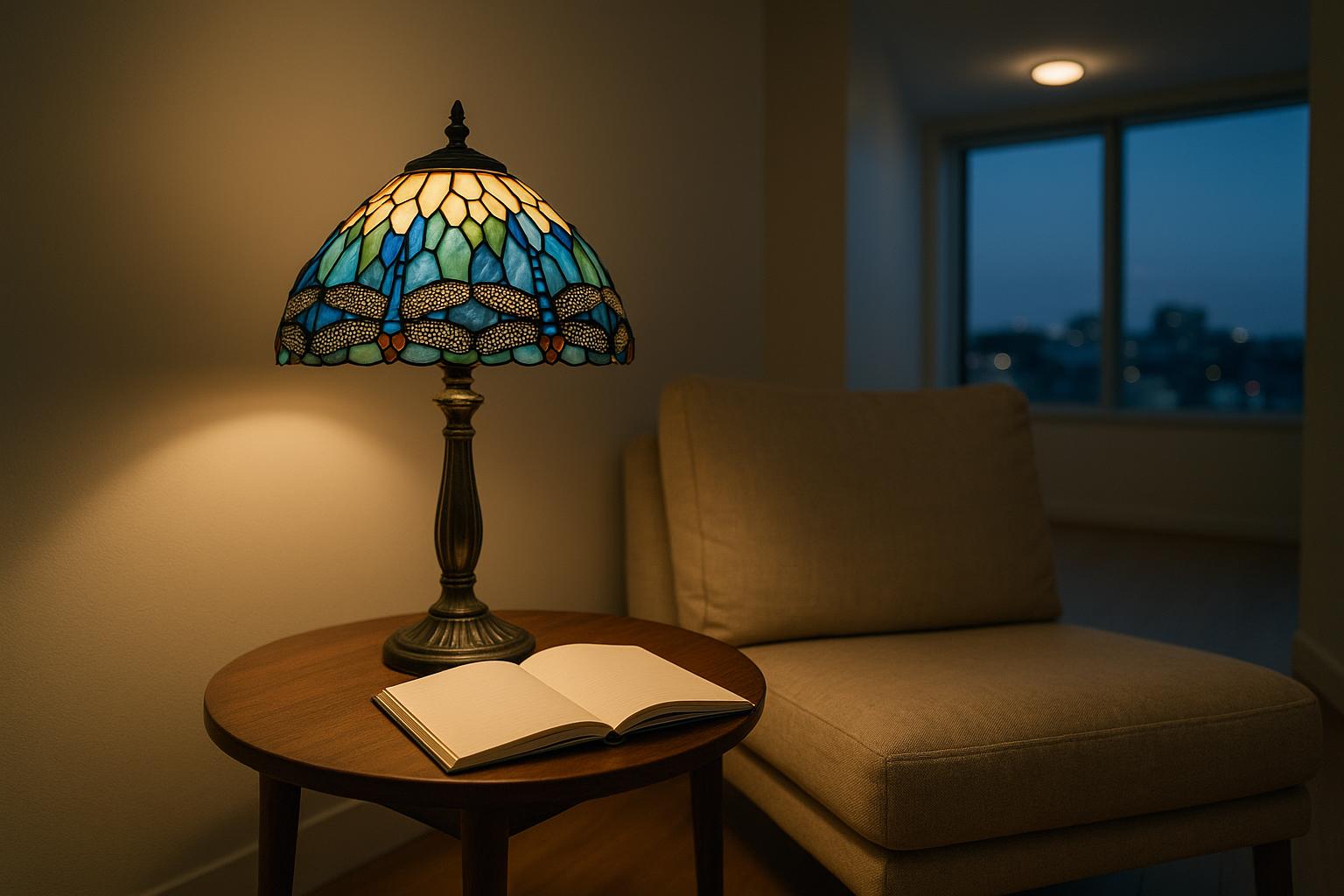
A lamp should be assessed from the height at which it will normally be seen. For Tiffany bedside lamps, sit or recline against the pillows and check where the lower edge of the shade would fall. The bulb should remain screened rather than shining directly into your eyes. A lamp that looks correctly proportioned while you are standing may produce uncomfortable glare from the bed.
Apply the same test beside a lounge chair. Sit naturally, then consider whether the shade blocks the brightest part of the fitting without obscuring the useful light below it. On a console, view the cardboard outline from the hallway or entry rather than only from directly in front.
Table height changes the result. A low side table can make a medium lamp sit too low for reading, while a tall bedside cabinet can lift the bulb into the line of sight. Judge the combined height of furniture and lamp rather than treating the product dimensions in isolation.
Protect everyday clearance
decorative table lighting still has to coexist with daily movement. Leave enough room to operate the switch, open nearby drawers and reach objects without brushing the glass. Check wardrobes, windows and curtains at their full travel. In a hallway, walk past the proposed position while carrying a bag or laundry basket to see whether the shade intrudes into the route.
Stability matters on small round tables and lightweight bedside furniture. Place the template where the base can sit fully supported and where the cord is unlikely to be pulled. Do not modify a fitting or improvise an unsuitable extension to make a difficult position work. Follow the product instructions for placement, bulb compatibility and operating limits.
Allow some visual clearance too. Detailed stained glass can become muddled against patterned wallpaper, crowded shelves or a dense group of photographs. A patch of plain wall and some open tabletop help the shape, glass pieces and metal lines remain legible.
Match the lamp to its lighting role
Decide whether the lamp is primarily decorative, ambient or intended to assist with a task. Small accent lamps are well suited to a bookcase, entry console or dim corner where a modest pool of coloured light is enough. They should not be expected to illuminate an entire lounge.
For reading, sewing and paperwork, consider where the useful light will land. Stained glass filters and colours the output, and some shades direct more light downwards than others. A decorative lamp may support a reading position without replacing a clearer task source. In open-plan living, it often works best as one layer alongside ceiling lighting, floor lamps and natural daylight.

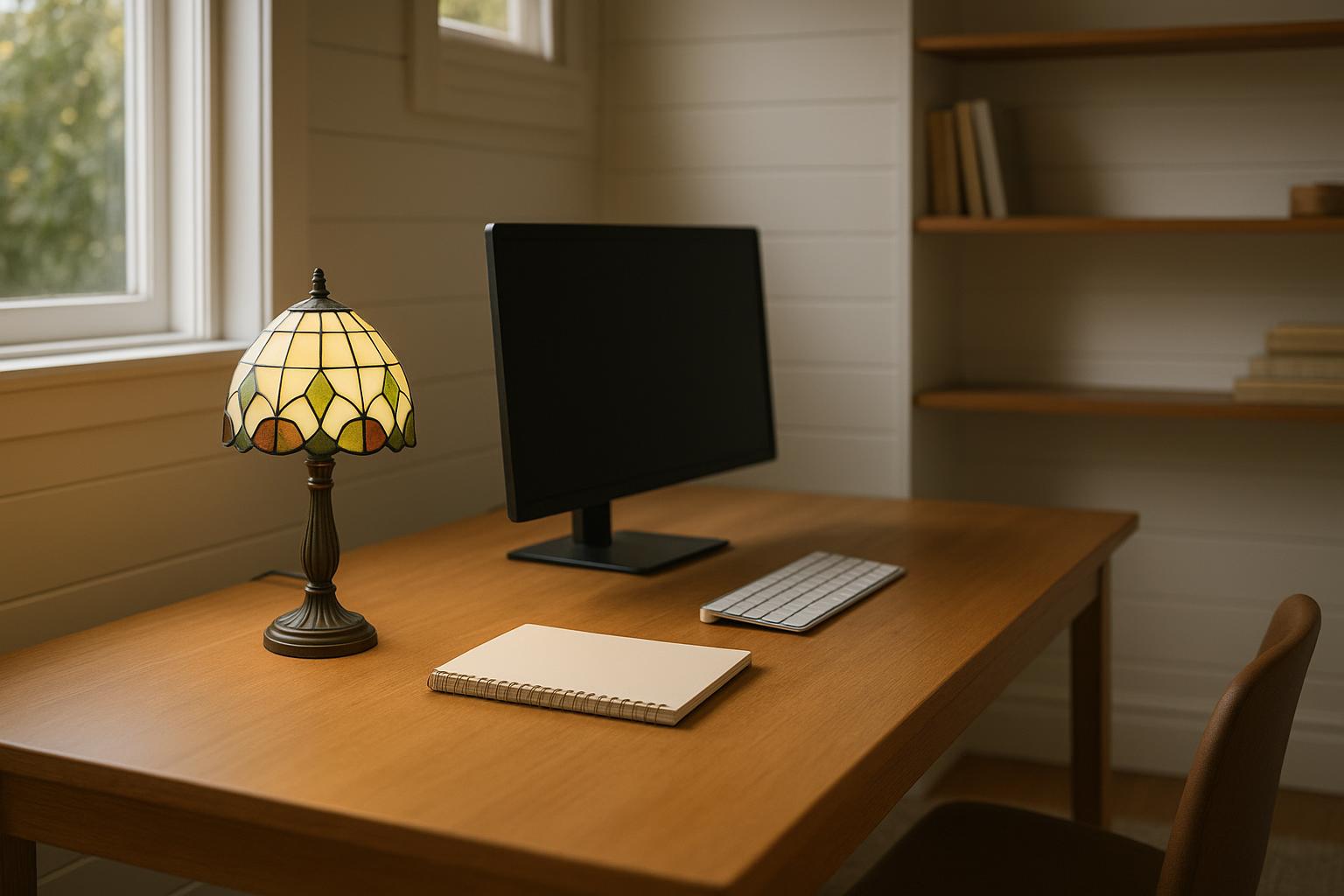
A desk lamp also needs to avoid casting the user’s hand shadow across the page. A right-handed person may find a lamp on the left more useful, with the reverse often working for a left-handed person. Test the arrangement with an actual notebook or keyboard rather than choosing the side solely for visual symmetry.
View the glass by day and night
Unlit and illuminated stained glass can appear markedly different. Cream, amber and pale green may look reserved during the day but develop a warmer presence after sunset. Deep blue, burgundy and purple can cast noticeable colour onto a nearby white or light-grey wall.
Strong daylight is another factor in Australian homes. Western sun may temporarily overpower a subtle lamp, while a dark internal hallway can make the same shade appear much richer. Consider when the lamp will usually be used. A piece selected mainly for its daytime colour may not have the desired character when illuminated at night.
Nearby finishes affect the result. Warm glass tends to sit comfortably with timber, cream and earthy colours, while cooler glass can provide useful contrast in a pale contemporary room. There is no need to repeat every colour already present. One or two connections with a rug, artwork or upholstery are generally enough to make the lamp feel deliberate.
Make bedroom and desk adjustments
On a narrow bedside table, prioritise a fully supported shade and room for essentials over perfect symmetry. Matching lamps can suit equal tables, but bedrooms with different furniture on each side may look better with related lamps of different sizes. Shared colours or similar metal finishes can provide continuity without forcing an identical arrangement.

At a desk, retain clear writing space and check reflections before settling on a position. Look at computer screens, glossy surfaces and framed glass from the seated position. Moving the lamp by 20 or 30 centimetres may remove a distracting reflection while preserving useful light.
If the stained-glass shade sits below eye level, confirm that it still directs enough light across the work area and does not expose the bulb from the chair. Demanding work may require separate task lighting, allowing the decorative lamp to contribute warmth rather than carry the full load.
Check the proposed position before buying
Bring the physical and visual tests together before making a final choice. Product dimensions are only the starting point; the lamp also needs to work with the table, nearby movement and the way the room is used.
- Confirm the total height, base footprint and widest shade measurement.
- Measure the tabletop after essential objects have been included.
- Use a paper footprint and a full-size cardboard outline.
- View the outline from the doorway, bed, desk or main chair.
- Check curtains, cupboard doors, screens and walking routes.
- Decide whether the lamp is decorative, ambient or task-supporting.
- Review the product instructions before choosing a bulb and location.
With those points resolved, motif and colour become easier to enjoy. A restrained geometric shade can add structure to a detailed study, floral glass can soften a plain console, and a compact tulip design can bring warmth to a bedside table without overwhelming it.
To compare available shapes and dimensions, browse the Tiffany table lamps collection with your measurements and templates nearby. The strongest choice is not necessarily the largest or most elaborate lamp. It is the one that sits securely, looks composed when unlit and gives the room a useful, comfortable glow after dark.