
Tulip Tiffany Lamps: How Aussies Use Floral Lighting for Colourful, Cosy Spaces
It’s easy to see why tulip Tiffany lamps are enjoying a revival in Australian homes. There’s something about their colourful, floral shades that brings a sense of warmth and optimism—whether you’re lighting up a sunroom in Byron Bay, a timber-lined terrace in Melbourne, or a bright city apartment. These lamps aren’t just decorative; they have a knack for making any space feel that bit more inviting, especially as the sun dips and the stained glass comes alive.
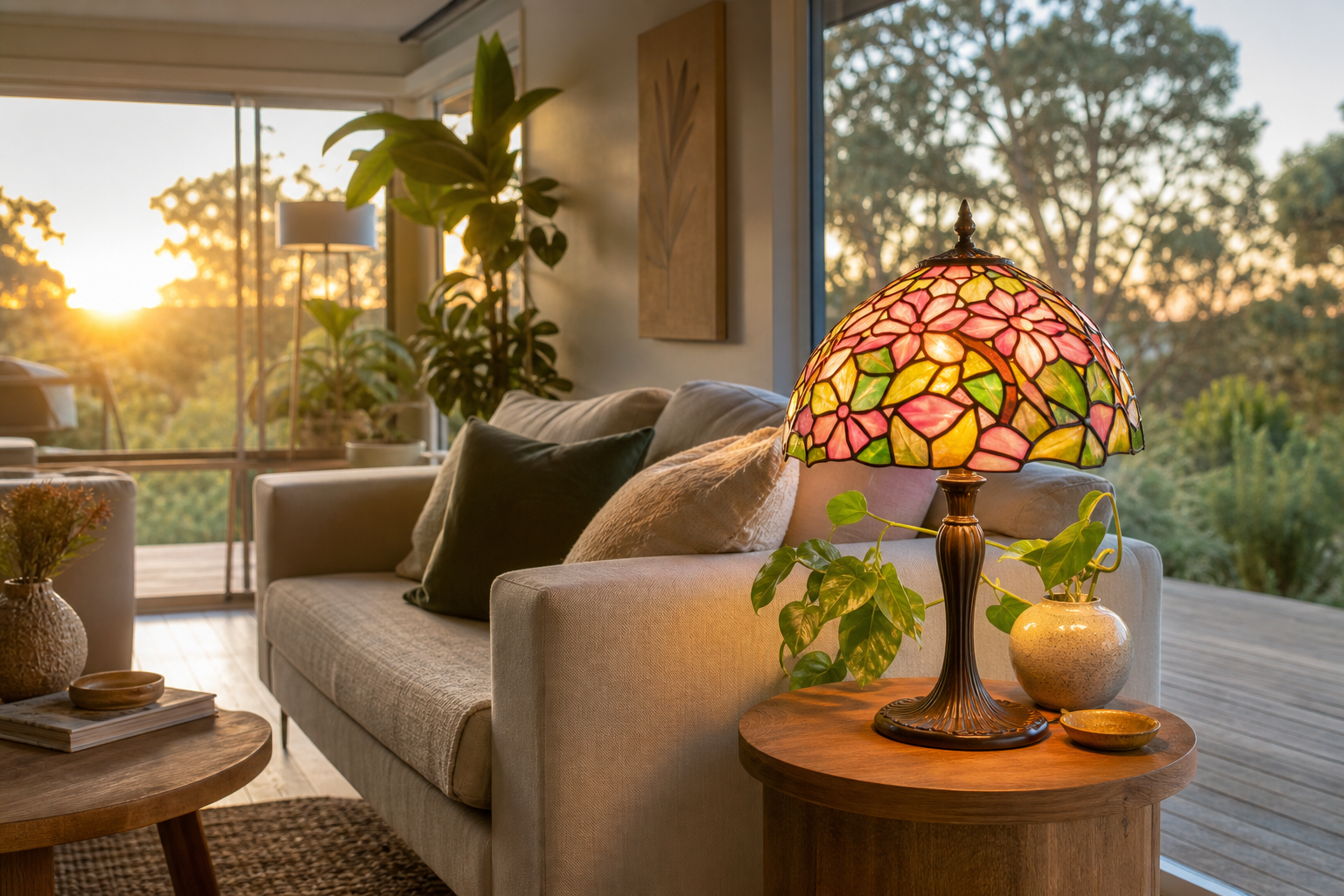
Tulip Tiffany Lamps: A Fresh Take for Australian Interiors
Unlike the more ornate, heavy Tiffany lamps of old, tulip style lights are lighter on their feet—literally and visually. Their petal-shaped glass panels, often in pinks, greens, yellows, or creamy whites, echo the Australian love for the outdoors and a laid-back lifestyle. There’s a real sense of playfulness in their design, which works just as well in a renovated Federation cottage as it does in a contemporary apartment with clean lines and pale timber floors.
Why Aussies Love Floral and Tulip Style Lighting
For many Australians, home is about comfort, colour, and a connection to nature. Tulip Tiffany lamps tick all three boxes. Their botanical shapes feel right at home in spaces that open onto leafy gardens, coastal decks, or even compact balconies. Plus, the dappled light effect from the stained glass creates a gentle, mood-lifting glow—perfect for winding down after a busy day or setting a relaxed tone for guests.
Real-Life Ways to Use Tulip Tiffany Lamps in Different Homes
In a classic Queenslander, a pair of tulip lamps on a sideboard makes the most of the high ceilings and timber panelling, while in a compact city flat, a single lamp on a hallway console adds just enough colour to break up the neutrals. If you’re in a rental with standard white walls, try a tulip lamp on a dining table or beside the bed—suddenly, the room feels more personal and less cookie-cutter. For coastal homes, the soft greens and yellows in some tulip lamps pick up the colours of native foliage and sandy backyards.
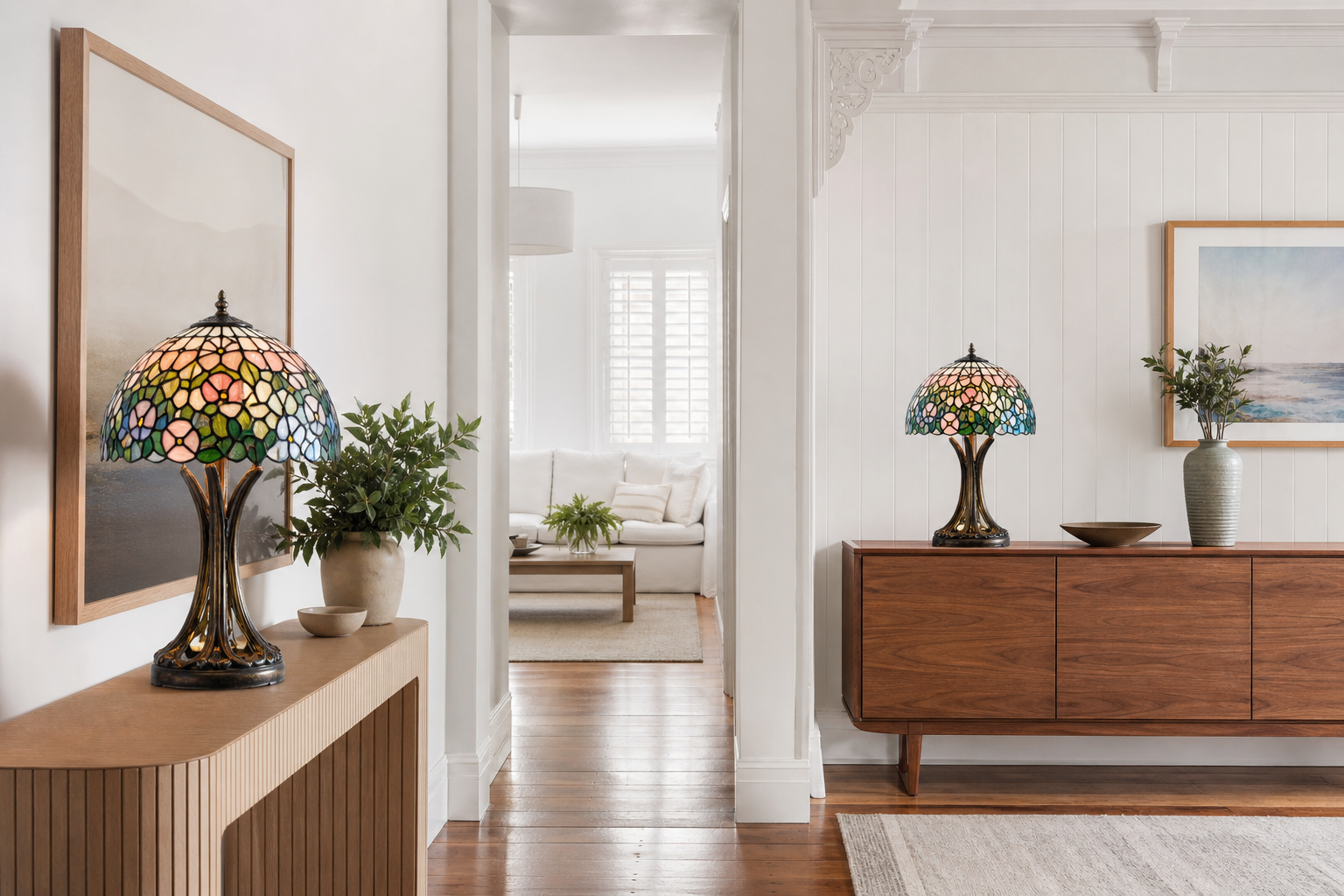
Mixing Stained Glass Florals with Modern and Classic Aussie Decor
One of the best things about tulip Tiffany lamps is their ability to bridge styles. In a modern living room with sleek furniture, the lamp’s organic curves and lively colours provide a welcome contrast—think of it as a bit of joyful rebellion against minimalism. In older homes with ornate cornices or pressed-metal ceilings, the floral design feels like a natural extension of the architecture. The trick is to let your lamp stand out: place it somewhere with enough breathing room, like the end of a timber buffet or on a vintage writing desk.
For more inspiration on blending stained glass lighting with different Australian home styles, you might enjoy our guide on how to style Tiffany lighting for coastal Australian interiors.
Choosing the Right Lamp: Size, Style, and Colour
When picking a tulip Tiffany lamp, consider both function and vibe. Smaller lamps are perfect for bedside tables or tucked onto a kitchen shelf, while larger ones can anchor a living room corner or brighten up a reading nook. Look for colours that suit the mood of your space—soft pinks and greens for restful bedrooms, or bolder reds and yellows for sociable living areas. If you can, turn the lamp on at different times of day to see how the stained glass shifts with the changing light. It’s a small detail, but it can make a big difference in how the room feels.
To see a curated selection of tulip Tiffany lamps in Australia, browse our stained glass lamps collection for every room and style.
Lighting Advice for Cosy, Colourful Ambience
For the best effect, use a warm white LED globe (or an old-school incandescent if you prefer) to bring out the richness of the stained glass. Avoid cool white bulbs—they can make the colours look washed out, especially at night. In open-plan spaces, use your tulip lamp to create a little oasis of colour and warmth, especially in corners that get lost after sunset. Don’t be afraid to move your lamp around; sometimes it shines brightest in the least expected spot, like a hallway table or sunroom bench.
Care, Placement, and Practical Tips
Tulip Tiffany lamps are built to last, but a bit of gentle care goes a long way. Dust the shade with a soft, dry cloth—never use harsh sprays or rough sponges. If your lamp sits near a window, you’ll enjoy extra bursts of colour when the afternoon light hits the glass. Make sure cords are tucked away, especially in busy family rooms or where pets and kids roam. And if you ever feel like your room needs a lift, try swapping the lamp’s position—you’ll be surprised how much difference it makes.
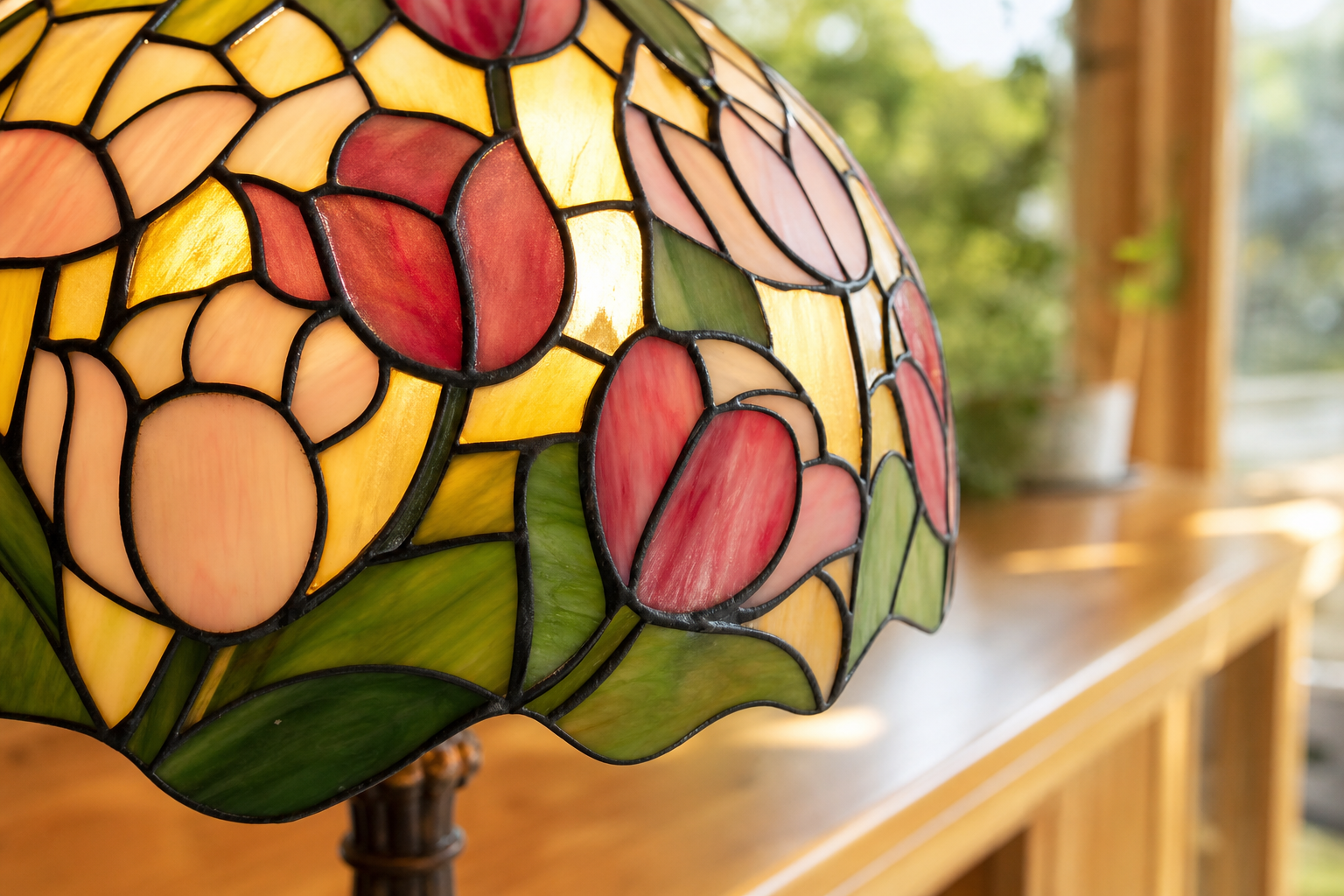
Ready to see more options? Browse the range of tulip style lights at Noeowo and find the perfect fit for your space, whether you’re after something subtle or a real conversation starter.
Frequently Asked Questions
What makes tulip Tiffany lamps unique among stained glass lights?
The tulip shape features rounded, petal-like glass panels, creating a soft floral silhouette and colourful glow that stands out from other floral lamps.
Will tulip Tiffany lamps look right in a modern Australian setting?
Absolutely. Their organic shapes and bright colours add warmth and personality to contemporary interiors, especially alongside timber or neutral walls.
How do I safely clean and maintain a stained glass tulip lamp?
Use a soft, dry cloth for dusting. Avoid sprays or abrasives. Check cords and bulbs occasionally to keep everything safe and tidy.
Are tulip Tiffany lamps compatible with LED bulbs?
Yes, most tulip Tiffany lamps work beautifully with warm white LED globes, so you can enjoy colour and mood with low energy use.
Where do tulip style lamps work best in Australian homes?
They’re great on hallway consoles, living room side tables, beside beds, or in sunrooms—anywhere you want a splash of colour and a welcoming glow.
What colours are common in tulip Tiffany lamps?
You’ll see pinks, reds, yellows, greens, and creamy whites—often mixed for a natural, botanical look inspired by real tulips.